Neurofeedback is a non-invasive way to train calmer, more regulated brain patterns. Here's how it works and who it may help.
Questions after reading? Tell us how to reach you and our team will call you.
Prefer to talk? Call (303) 465-6332 · Book online
We never share your information. Please do not include medical details.
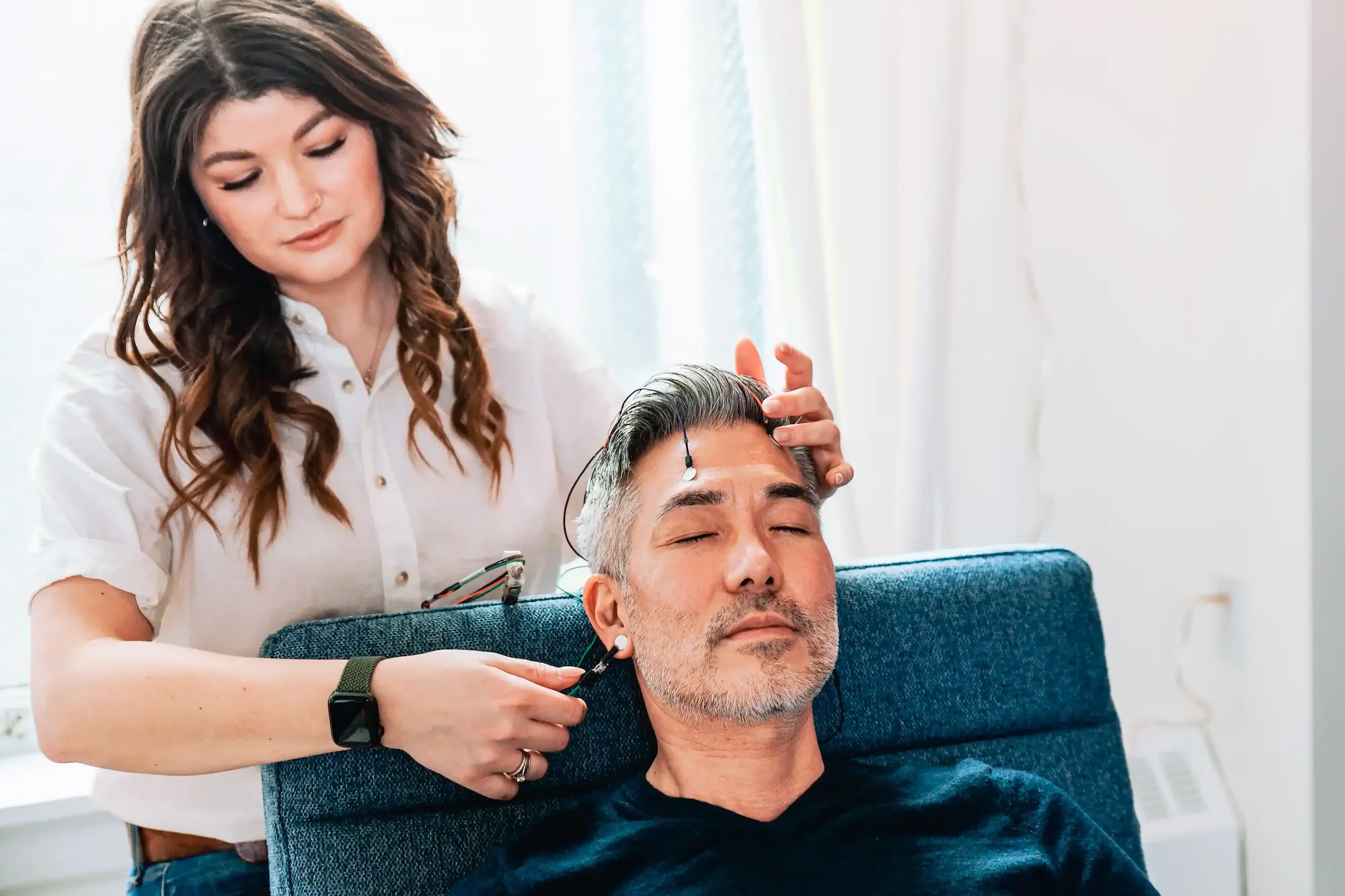
Short answer: neurofeedback is a non-invasive form of biofeedback. Sensors on the scalp read your brain's electrical activity, and a computer gives you real-time feedback, usually through sound or video, whenever your brain moves toward a more regulated pattern. Over many sessions, the brain learns to produce those patterns more easily.
Sessions are relaxing and typically last 30 to 60 minutes. Most people need a series of sessions to see lasting change, and your provider will track progress along the way.
Research on neurofeedback is strongest for attention, and it is growing for anxiety, sleep and other conditions. It isn't a cure, and results vary from person to person. We use it as one part of a complete plan, never as a replacement for medical or mental health care, and we work alongside your physician or counselor.
The nervous system influences pain, sleep, muscle tension and breathing. When it stays on high alert, the body has a harder time healing. That's why neurofeedback often pairs well with breathing retraining, acupuncture and movement-based care in our integrated approach. Our pre-surgical rehab client and bone health client both used neurofeedback as part of their care.
Learn more on our neurofeedback service page.
We accept health insurance as an out-of-network provider, auto insurance claims, workers comp claims.
Neurofeedback is non-invasive. The sensors only record brain activity, and nothing is sent into the brain. Some people feel tired or briefly wired after early sessions.
It varies. Most people need a series of sessions, and your provider will review progress regularly so you know whether it's helping.
No. It works alongside care from your physician or mental health provider.
Many neurofeedback programs work with children and teens. Ask our team whether it's a good fit for your child.
Looking for help with a specific problem? Browse the 30 conditions we treat, read about our approach to care, or see how we help after a car accident or a work injury.
This article is for general education and is not a substitute for medical advice. Every patient is different. Please talk with one of our providers about your own symptoms and goals before starting any treatment.
Have a question this article didn't answer? Our team will listen, explain your options and help you choose the right care for your goals.